
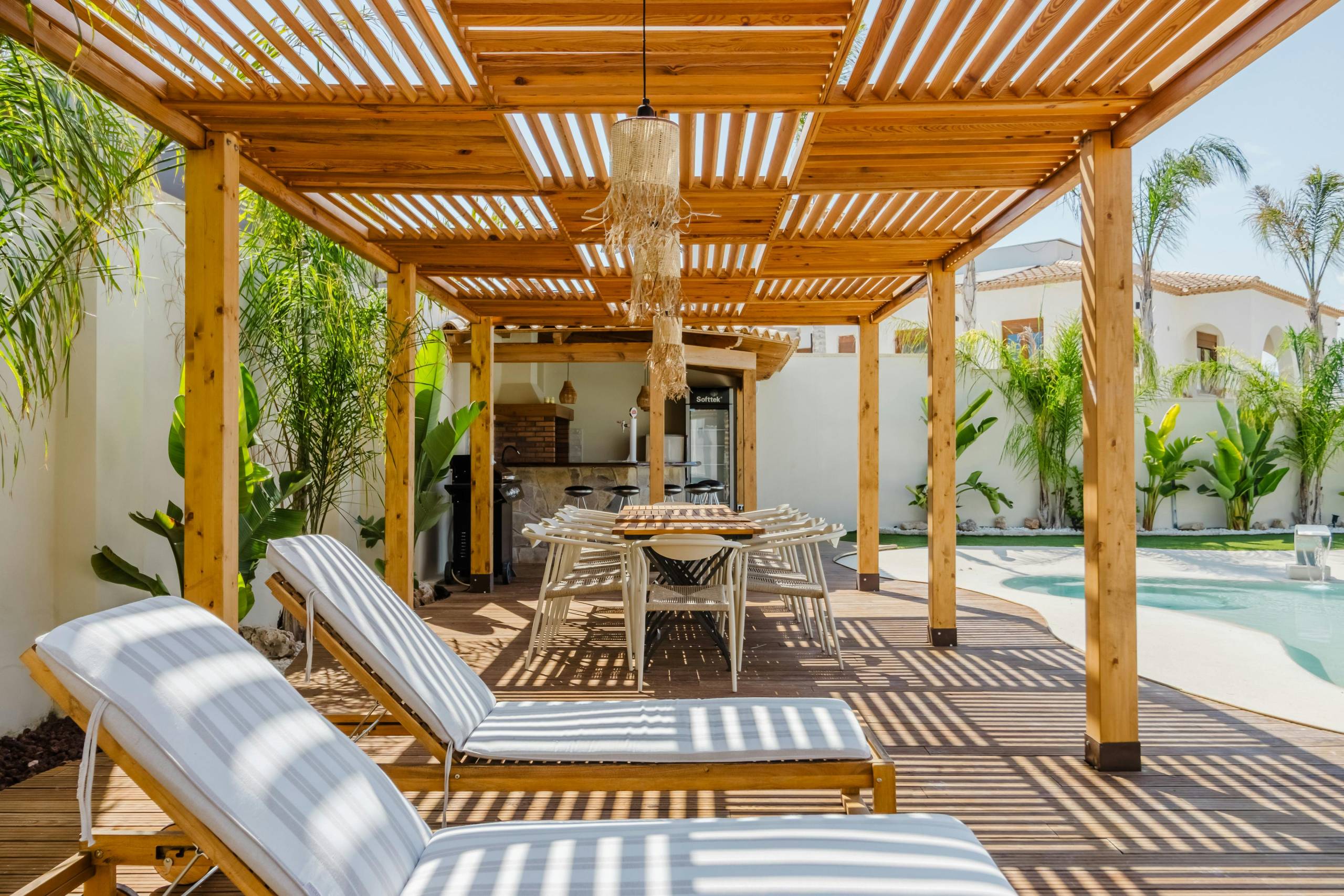
Summer sunshine is one of life’s simple pleasures—it brings warmth, light, vitamin D, and a reason to spend more time outside. But when there’s too much of it, your outdoor space can quickly become uncomfortable and underused.
That’s where a pergola comes in. A well-designed pergola can turn an overly exposed area into a comfortable, shaded living space that enhances privacy and is perfect for upgrading patios or pool decks into stylish, durable spaces for dining or relaxing. One of my favorite modern upgrades is the louvered roof pergola. Here in coastal Georgia and South Carolina, those predictable late-afternoon summer showers—right around 5 p.m.—can interrupt outdoor plans. With a louvered roof, you can simply close the slats as the rain rolls in, keeping your space dry and your dinner uninterrupted. Pergolas are just as effective against the harsh midday sun—simply close the louvered roof and enjoy a relaxed summer lunch in a space that can feel 15–20 degrees cooler than the surrounding patio.
When it comes to placement, I typically recommend keeping the pergola as a standalone structure rather than attaching it to the home. In many cases, a detached design can simplify the process—potentially avoiding permitting requirements while also reducing installation costs and complexity.
When it comes to design, think of pergolas as destinations. They can be subtle retreats or statement features—lush, whimsical spaces draped in greenery. Wisteria is a favorite for creating that romantic, vine-covered look, but it’s best kept off your home. Given time, it can work its way into roofs and structures with surprising force. On a pergola, though, it’s perfect—free to grow wild, wrap every beam, and create the kind of shaded, immersive escape that makes the space feel truly magical.
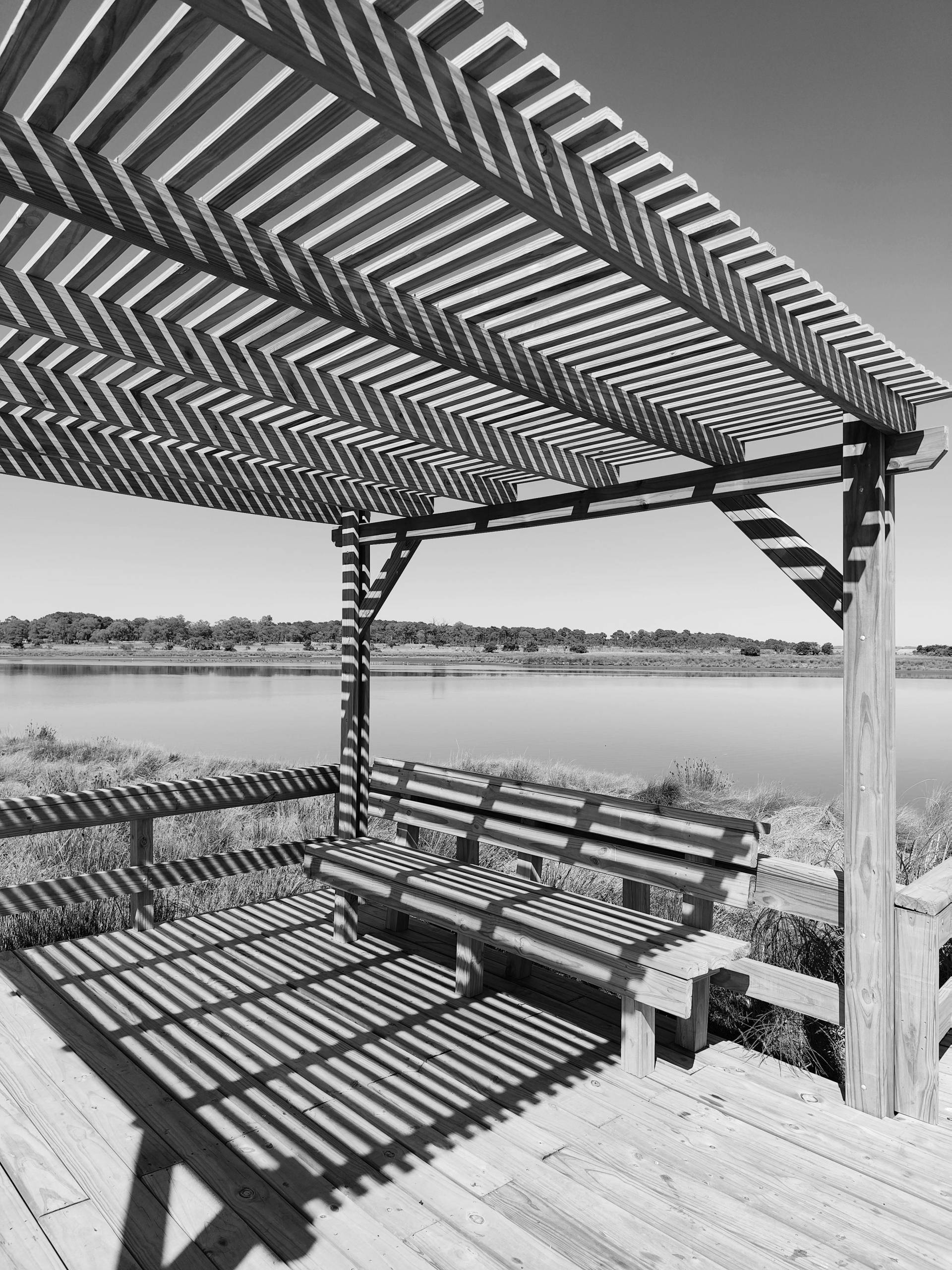
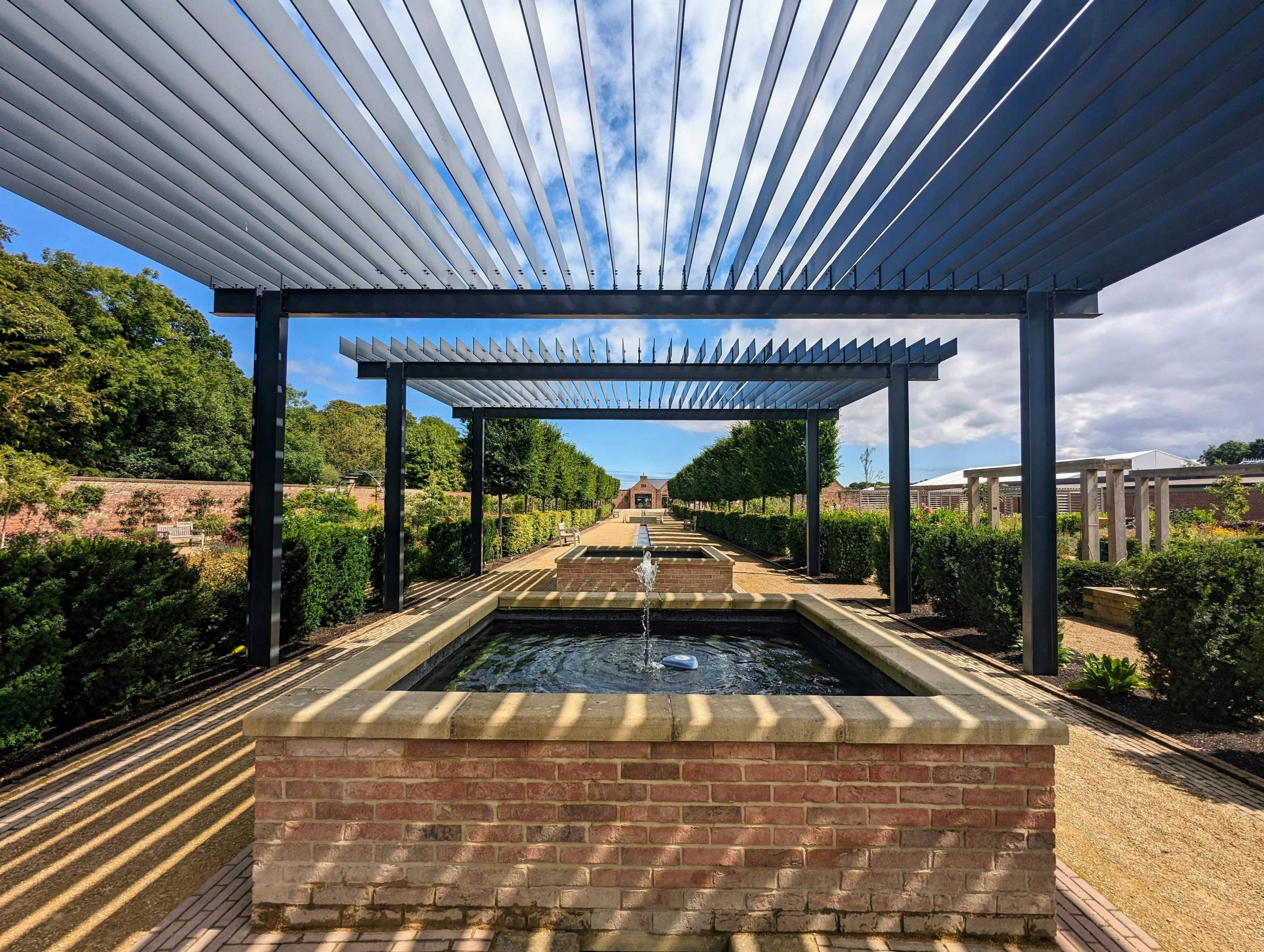
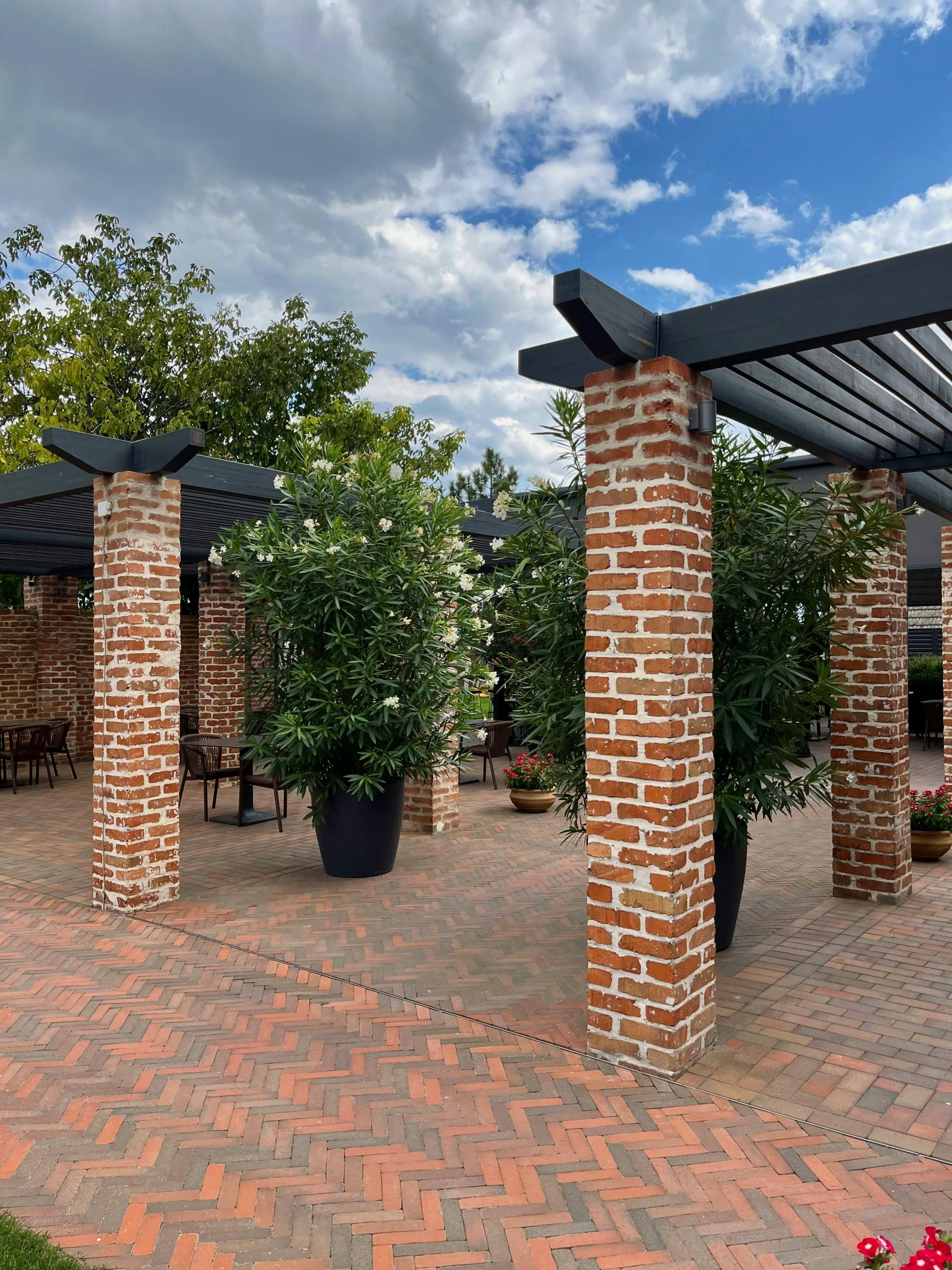
All in all, pergolas are a beautiful, cost-effective addition to any backyard—extending the comfort and usability of your patio or poolside space while, when thoughtfully designed, adding to your home’s overall value.